Science
Thirty years of research, organized around one vital measure: waist circumference. Explore visceral fat and fasting, the mineral–hunger connection, and what the evidence says about GLP-1 adaptation.
01 · Fasting, Belly Fat & Longevity
The fat around your middle is the fat that matters.
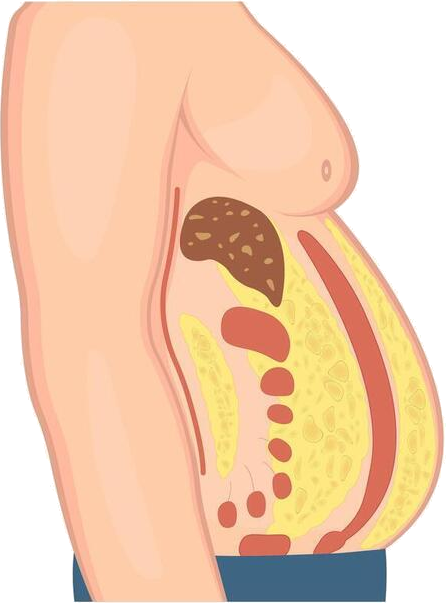
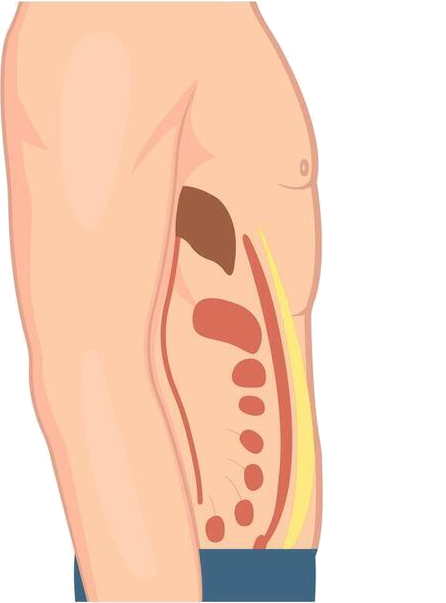
Visceral fat — the fat packed around your organs, hidden beneath the outer subcutaneous layer — is one of the strongest predictors of premature death, more telling than weight or BMI alone. The good news: it responds to when you eat, not just what.
An 8-hour eating window cuts visceral fat — as sustainably as cutting calories.
Time-restricted eating reduced visceral fat comparably to daily calorie restriction in a randomized trial. The fasting hours also trigger autophagy, the cell's natural cleanup.
He et al., Cell Reports Medicine, 2022. →Waist size tracks with how long you live.
In large cohorts, a larger waist circumference predicted higher all-cause mortality independent of BMI.
Cerhan et al., Mayo Clinic Proceedings, 2014. →Sugar feeds visceral fat; salt does not.
Fructose-sweetened drinks increased visceral fat and worsened insulin sensitivity in a controlled trial — which is why Zero Hunger Water is sugar-free by design. Remove the sugar, keep the salt.
Stanhope et al., J Clin Invest, 2009. → Bonus · Watch
The day Dr. Oz measured my belly.
2008, Columbia University. The on-air moment Dr. Oz measured Jorge's waist — and made visceral belly fat impossible to ignore.
Watch the moment →02 · The Mineral–Hunger Connection
Much of what you call hunger is a mineral signal.
Modern diets and fasting both deplete sodium, potassium, and magnesium. When those minerals run low, the body doesn't ask for them directly — it ramps up the drive to eat. Replace what's missing, and a large share of that "hunger" quiets at its source.
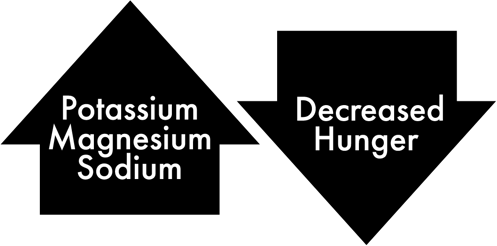
Low sodium drives salt- and food-seeking.
When sodium is depleted, the brain's drive toward salt and palatable food rises sharply — a well-mapped physiology, not a theory.
Morris, Na & Johnson, Physiology & Behavior, 2008. →Magnesium steadies blood sugar — and steadier blood sugar means fewer cravings.
In randomized trials, oral magnesium improved insulin sensitivity and fasting glucose. About half of U.S. adults fall short of the magnesium target.
Meta-analysis of RCTs, 2016. →Electrolytes make fasting livable.
Replacing sodium, potassium, and magnesium relieves the fatigue, headache, and hunger that derail a fast — which is why most members sip minerals across their fasting window rather than reaching for food.
Electrolyte balance during fasting — review. →03 · GLP-1s Adapt & Fade
GLP-1 works — until the body adapts.
Every powerful weight-loss tool runs into the same wall: the body fights back. GLP-1 medications produce strong appetite suppression at first, but the effect plateaus around 60–72 weeks — and when the medication stops, most of the lost weight returns, roughly two-thirds within a year. Restoring minerals is different: there is no known tolerance or adaptation to them. As long as the deficiency is corrected, the effect holds.
GLP-1 appetite suppression plateaus — tachyphylaxis.
GLP-1 medications produce strong appetite suppression at first, but the effect plateaus around 60–72 weeks as the body adapts. This is metabolic adaptation, and it applies to nearly every powerful weight-loss tool.
Wilding et al. (STEP-1), semaglutide, NEJM 2021; Jastreboff et al. (SURMOUNT-1), tirzepatide, NEJM 2022. →Most lost weight returns after the medication stops.
When the drug is withdrawn, roughly two-thirds of the lost weight returns within a year. Continued dosing maintains it; stopping reverses it.
Wilding et al. (STEP-1 extension), Diabetes Obes Metab 2022; (SURMOUNT-4), JAMA 2024. →Minerals don't fade — there is no tolerance to them.
Unlike drugs the body adapts to, minerals are nutrients the body needs daily. There is no known tolerance or adaptation to them — as long as the deficiency is corrected, the effect holds.
Hall KD. Metabolic adaptations to weight loss across diet, drug, and surgery. Obesity, 2024. →Important. ZERO HUNGER WATER® registered does not contain GLP-1 and is not a GLP-1 drug or a substitute for one. Always talk to your doctor before starting, changing, or stopping any medication.
04 · The Studies — Reference Materials
References
- 01.Morris MJ, Na ES, Johnson AK. Salt craving: the psychobiology of pathogenic sodium intake. Physiology & Behavior. 2008. PMID 18514747.
- 02.Meta-analysis of randomized controlled trials: oral magnesium supplementation, insulin sensitivity and fasting glucose. 2016. PMID 27530471.
- 03.He M, et al. Time-restricted eating with or without low-carbohydrate diet reduces visceral fat and improves metabolic syndrome: a randomized trial. Cell Reports Medicine. 2022. PMID 36220069.
- 04.Cerhan JR, et al. Waist circumference and all-cause mortality. Mayo Clinic Proceedings. 2014. PMID 24582192.
- 05.Katzmarzyk PT, et al. Waist circumference and mortality risk. Archives of Internal Medicine. 2009.
- 06.Stanhope KL, et al. Fructose-sweetened beverages, visceral adiposity and insulin sensitivity. Journal of Clinical Investigation. 2009. PMID 19381015.
- 07.Wilding JPH, et al. (STEP-1) Once-weekly semaglutide in adults with overweight or obesity. New England Journal of Medicine. 2021.
- 08.Jastreboff AM, et al. (SURMOUNT-1) Tirzepatide once weekly for obesity. New England Journal of Medicine. 2022.
- 09.Wilding JPH, et al. (STEP-1 extension) Weight regain after withdrawal of semaglutide. Diabetes, Obesity & Metabolism. 2022. PMID 35441470.
- 10.(SURMOUNT-4) Continued versus withdrawn tirzepatide and weight maintenance. JAMA. 2024.
- 11.Hall KD. Metabolic adaptations to weight loss across diet, drug, and surgery. Obesity. 2024.
Most hunger isn't hunger. It's a mineral deficiency.
Take the 3-minute assessmentIllustrative — not a claim of specific results. All graphics on this page (visceral-fat animation and adaptation chart) are educational illustrations, not depictions of a specific individual's outcome. These statements have not been evaluated by the Food and Drug Administration. ZERO HUNGER WATER® registered is not intended to diagnose, treat, cure, or prevent any disease, and is not a substitute for medical care or prescribed medication. If you have kidney disease, high blood pressure, heart failure, or take medications that affect potassium (ACE inhibitors, ARBs, or potassium-sparing diuretics), talk with your doctor before increasing your mineral intake.